

Repurposed shipping containers have quietly become one of the most versatile building blocks in Australia. Farmers use them for equipment storage, tradies turn them into mobile workshops, and homeowners convert them into granny flats, studios and even swimming pools. If you’re thinking about buying a shipping container for the first time, it pays to understand exactly what you’re getting before you sign on the dotted line.
Unlike a car or a fridge, a shipping container doesn’t come with a glossy brochure explaining grades, sizes and structural quirks. Most buyers learn the hard way — after delivery, when they discover the unit has more rust than expected or doesn’t quite fit the space. This guide walks through the essentials so you can make a confident, informed decision.
Understanding Container Grades
Shipping containers are generally sold in a handful of condition grades, and understanding the difference can save you a lot of grief.
- New (one-trip) containers have made a single voyage from the factory, usually overseas, and are in near-pristine condition. They cost more but come with minimal wear.
- Cargo-worthy containers have been used commercially but are still structurally sound and weatherproof enough for shipping.
- Wind and watertight (WWT) containers are no longer certified for international freight but are perfectly fine for storage, provided the seals and roof are intact.
- As-is containers are sold without any guarantee of condition — often the cheapest option, but they can carry hidden issues like corrosion or damaged flooring.
For long-term storage or conversion projects, cargo-worthy or WWT units strike the best balance between price and durability. As-is units are best reserved for buyers who plan to fully renovate the container anyway.
Choosing the Right Size
The two most common sizes are 20-foot and 40-foot containers, though 10-foot units are increasingly popular for smaller storage needs. A 20-foot container offers around 33 cubic metres of internal space — plenty for household goods, tools or stock overflow. A 40-foot unit roughly doubles that capacity and is often the better value option per cubic metre if space allows.
Height matters too. Standard containers sit at around 2.6 metres externally, while “high cube” versions add roughly 300mm of internal headroom — a worthwhile upgrade if you’re planning to walk around inside comfortably or install shelving.
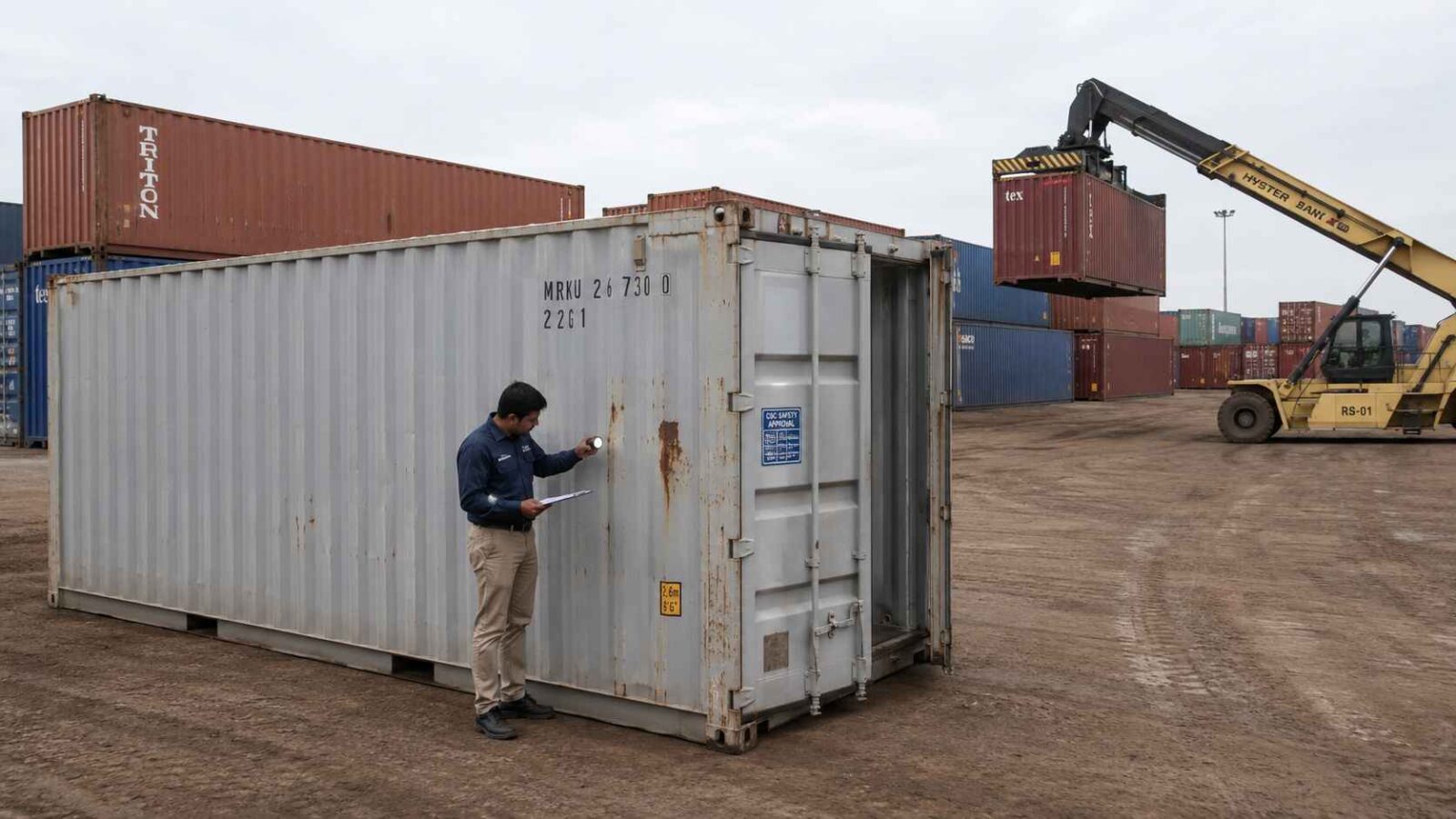
What to Inspect Before You Buy
Whether you’re buying new or used, a proper inspection prevents costly surprises:
- Roof and door seals — check for daylight gaps, which indicate water ingress risk
- Flooring — most containers use marine-grade plywood; look for soft spots or staining
- Corner castings and rails — these structural points should be free of significant rust or dents
- CSC plate — this certification plate confirms the container has passed structural safety checks
If you’re buying sight-unseen, ask the supplier for recent photos of the interior, exterior, floor and door mechanisms before committing. A reputable supplier will have no issue providing this.
Site Preparation and Access
Getting the container to your property is only half the job — getting it into position is where plans often go sideways. Delivery trucks typically use a hook-lift or tilt-tray system, which requires a relatively flat, firm, and obstruction-free path of roughly the container’s length plus a few extra metres for manoeuvring.
Before delivery day:
- Confirm ground load-bearing capacity, especially on soft or sloped sites
- Check overhead clearance for power lines and tree branches
- Lay a level base of compacted gravel, concrete pads or bearers to prevent moisture from wicking up through the floor
- Confirm with your local council whether a permit is required, particularly if the container will be a permanent fixture
Skipping ground preparation is one of the most common mistakes new buyers make — a slightly uneven base can lead to warped doors that no longer seal properly within a year or two.
Modifications and Conversions
One of the biggest appeals of shipping containers is how adaptable they are. Popular modifications include:
- Roller doors or personal access doors cut into the side panels
- Insulation and internal lining for temperature control
- Ventilation louvres to reduce condensation
- Electrical wiring for lighting, power points or air conditioning
- Window cut-outs for natural light in habitable conversions
If structural modifications are involved — particularly cutting into the walls or roof — it’s worth having an engineer assess the impact, since removing steel affects the container’s overall rigidity. For those exploring more involved builds, browsing a supplier’s current range of shipping containers in Perth is a useful first step to understand what base units are realistically available before committing to a design.
Buying New vs Second-Hand
New containers make sense when appearance matters — for example, a container being used as street-facing signage or a customer-facing pop-up. Second-hand containers are usually the smarter economic choice for storage, workshops and back-of-property uses where a few scuffs and faded paint won’t matter.
It’s also worth factoring in resale value. Containers hold their value reasonably well compared to other storage solutions, particularly cargo-worthy units, which means a well-maintained container can often be sold on later for a good portion of the original purchase price.
Final Thoughts
A shipping container can be one of the most cost-effective storage or building solutions available, but only if you go in with realistic expectations about grade, condition and site requirements. Take the time to inspect thoroughly, prepare your site properly, and think ahead about how the container will be used — a little diligence upfront avoids expensive headaches down the track.